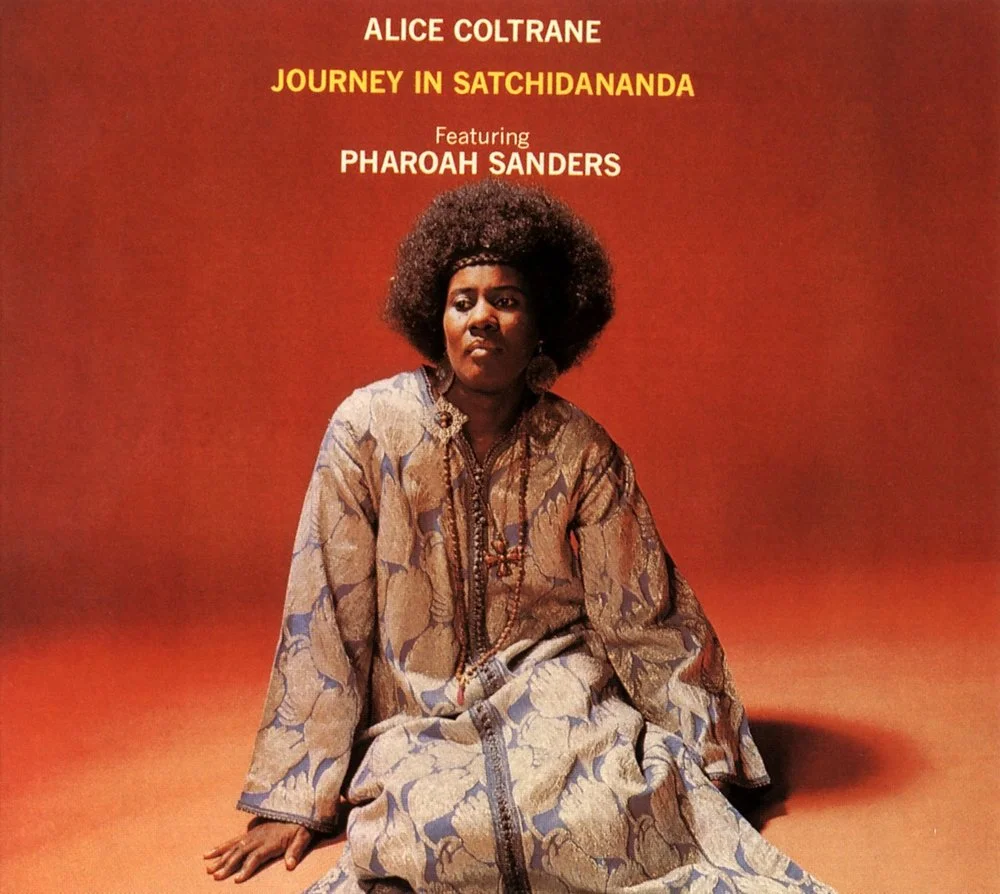
Alice Coltrane was a Hindu spiritual leader, and within Journey in Satchidananda, there is this transcendence, a taste of Indian microtones. Alice plays harp like weaving light, intermingling in an ethereal way with Pharoah’s Sander’s moaning and oscillating tone on the tenor saxophone. Rashied Ali’s percussion flickers like wind chimes caught in a storm. After hearing these musicians, you begin to realize the infinite and ever expanding universe of sound, and the unexplainable ways it changes how you feel, and the state of your consciousness.
Alice Coltrane plays harp like she’s touching light. Pharoah Sanders’s tenor sax moans from another realm. Rashied Ali’s percussion flickers like wind chimes caught in a storm. From the first note, you’re not on Earth anymore.
This record is a demonstration of music, but a demonstration of deviation. One can imagine the bass drones, the tamboura hums, and the harp’s trills ascending and dissolving like incense smoke.
“Something About John Coltrane,” a tribute to her husband, feels like a love letter sent across galaxies — a duet between grief and grace. This isn’t a listening experience akin to bebop or swing. It’s less about virtuosity than the peace found in textures and the core of sound itself. A Journey in Satchidananda is a journey by yourself, walking barefoot, wading through the pond. It’s a cleansing experience, one in which the listener is stripped of whatever ego exists in other musical forms. In this album, we feel inclined to turn inward, turn to prayer.