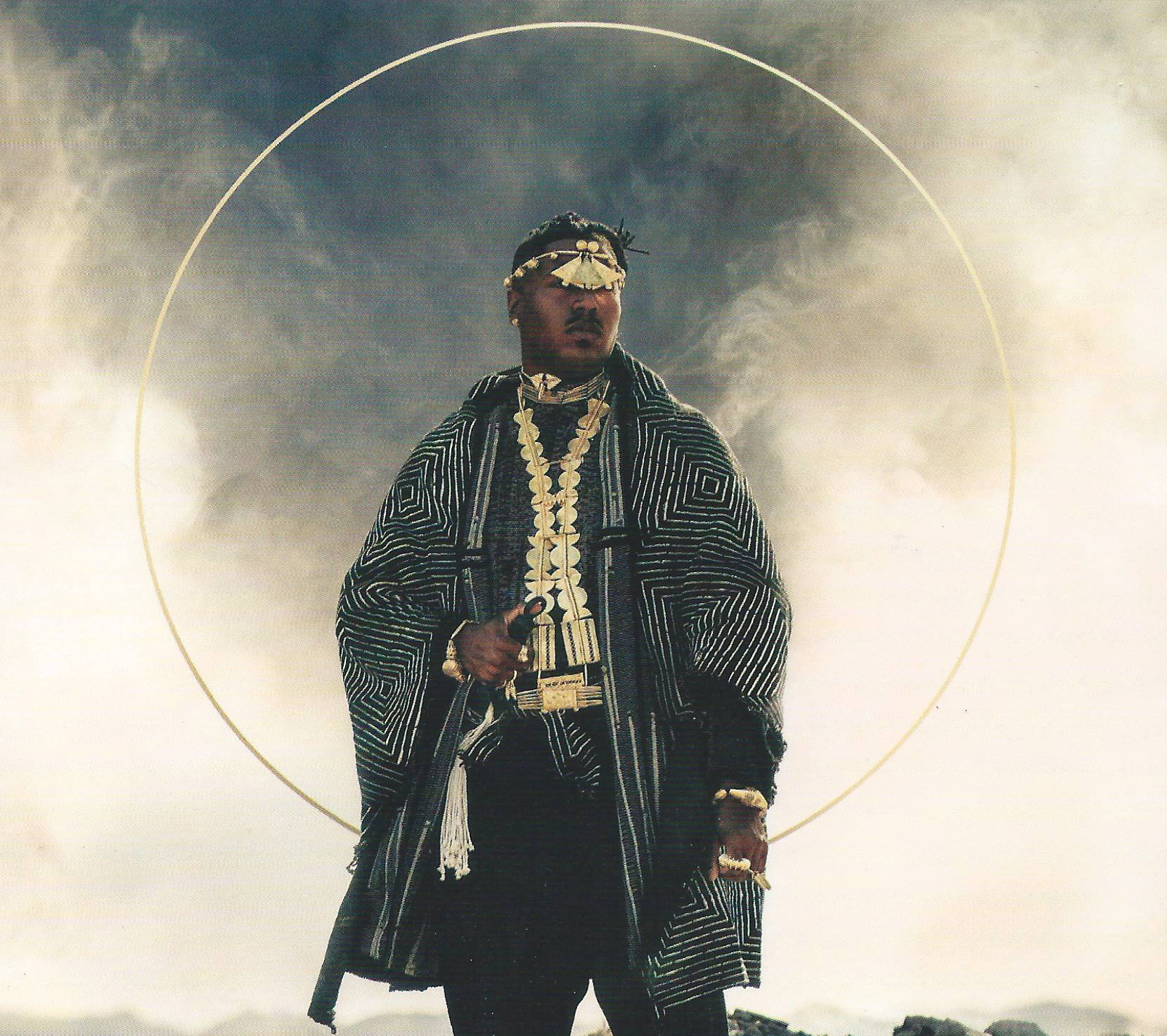
True to its name, Ancestral Recall remembers, it recalls. Adjuah takes the trumpet back to religious roots.
The opening sounds of this album are an astonishing variety of ambient chatter, beats, and woodwinds, and an overlaying serenity through Adjuah’s trumpet. It’s unclear whether you are still where you were before you began listening; indeed, you’ve been transported into this ancestral space, one of the past, one of deep communal music.
The percussion hits first, tumbling polyrhythms like that of heartbeats and rainfall. The trumpet is a breathless incantation, a prayer.
“Forevergirl” feels like a tangling of mourning and rebirth. The flugelhorn conveys the ghostly spirit of New Orleans second lines and West African drum circles. The vocals sound like they’re recorded in a vast open space, an indefinitely large space. The vocals float over everything else, and convey a deep peace. The rap that follows integrates seamlessly, completing the drum’s polyrhythms. In this regard, this song is an emblem for this album: an overlap of serenity with activity, and a reconciled integration of both into the same space.
Ultimately, this album isn’t fusion for the sake of fusion; Scott’s “stretch music” philosophy isn’t about blending styles, but recovering past memories of sound. The ancient diasporic rhythms of meeting modern electronics attest to this fact. By the final track, there isn’t room for applause: we want to sit in silence and in reverence; Ancestral Recall doesn’t end, but stays with us as a reminder that jazz’s future is just as much remembrance as innovation.