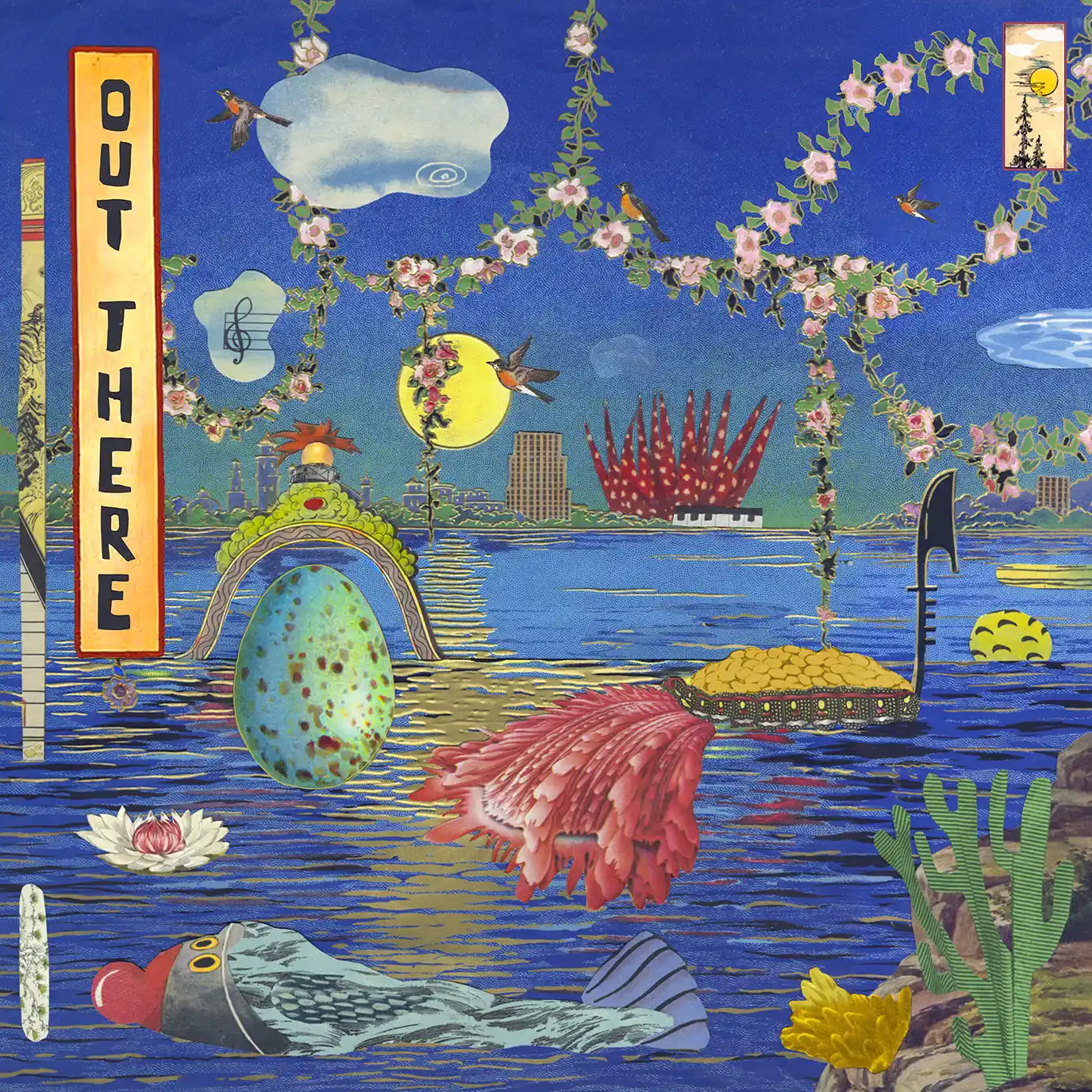
Out There is Hiromi stepping past the edge of the map, cresting the horizon, though whether it is for good is what holds the reader in suspense. If Hiromi’s earlier works are lost in an undefined stretch of time and harmony, Out There stretches the literal places of our imagination. From the piano’s first whispers, we can imagine ourselves drifting above Earth’s atmosphere, suspended in a nebulous glow, but also simultaneously feeling the pulse of a subway station as we wait for our ride at midnight.
The opening theme begins, a single note, repeated with an enigmatic purpose. It hovers, unanswered, until Hiromi’s left hand drops in with Earth's gravity, and suddenly, we are moving. Her piano is the engine, which propels the harmony into clarity, from nebulous chords into melody. The band enters with no hesitation: the bass slapping a nebulous groove which the drums later outlines, bringing the rhythmic motif into sudden clarity.
Hiromi’s phrasing is cinematic — there are moments where she plays like she is drawing freely, almost carelessly in bliss, and at other moments we hammers down with the methodological fury of decades of training. The integration of both creates a compelling performance.
As we approach the middle of the album, a deep space of quiet emerges. Orion is more whispered than said, with Adam O’Farill coaxing out the trumpet’s ever evasive softness. It feels like looking out a shuttle window at Earth rotating silently below. There’s no rush, yet the tempo flows, the rhythm playing an 11/8 groove that propels each measure into the next, seemingly effortlessly. Hiromi lets silence breathe, and much like Adjuah’s Ancestral Recall, she lets the notes remember where they came from.
However, with the record’s final stretch, returns a thruster heat — rapid time signatures, heavy syncopation, and big band-like unison on the front like. In Balloon Pop, every voice is heard in one way or another, and especially the bass, which has been an everpresent yet never forefront voice, really emerges here as one of the front lines. The snare and kick drum are vivaciously implemented to give the image of a popping explosion.
Ultimately, Out There isn’t really about leaving Earth, in the sense of a metaphorical place; rather, it’s more about realizing ourselves as journeymen, and music our vessel. Indeed, this Hiromi is still searching in this album, in its small impracticalities, brief moments of awkwardness shows she is still searching. Still unspooling the endless thread of the piano’s voice.
Though Hiromi has crested the horizon, she is beckoning us to follow. There is more.
More sound. More space. More feeling.
And at the final note’s end, there is the trumpet’s afterglow, the reverb careening off into unexplored space. We’re at the end of an adventure, leaving us with a soft ache behind the ribs, the feeling of having glimpsed something beautiful, if only for a moment. We’d do well to remember the record lives out there, not in here.